
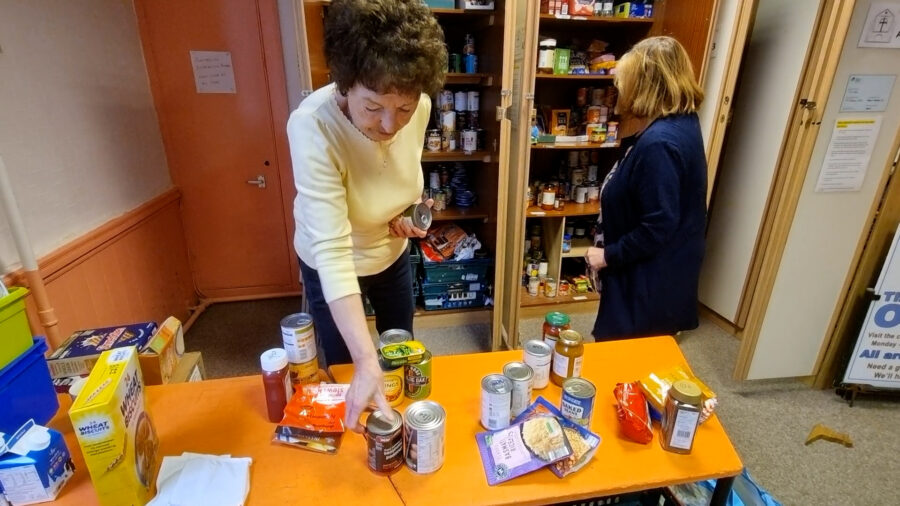
Community Social Supermarkets: understanding how they shape access and availability to healthier foods in food insecure communities
This project explored the use of social supermarkets (SSMs) to address food poverty in disadvantaged communities. The aims were to better understand how SSMs are used, consider whether they have the potential to reduce food insecurity and stigma whilst also exploring ways to encourage uptake of healthier produce.
Objective 1. A scoping review was carried out to explore how social supermarkets are used throughout the UK. This included defining how they may be categorised; what purpose they serve within communities and understanding of how they are perceived by communities.
Objective 2. Availability and accessibility of SSM products across the North East and North Cumbria. A survey was distributed across a sample of social supermarkets across the region to understand what products are available and how often customers use SSMs.
Objective 3. Understand how people in the North East, specifically Middlesbrough, use and perceive SSMs, known locally as Eco Shops. Interviews were carried out with a sub-sample of shop managers and customers to further explore purchasing behaviour and gather views and perceptions of SSMs / Eco Shops.
Objective 4. Explore ways of encouraging customers to buy and use healthier SSM items. Ways of encouraging customers to buy and use healthier food items was explored throughout the project.
Involving members of the public and community groups
Members of social supermarket communities were involved in this project. This included several Eco Shop communities across the Tess Valley as well as other SS further afield such as the Community Grocer and the Bread and Butter Project. The Salvation Army also contributed to the development of the project. The project was developed alongside members of the Eco Shop community, including those co-ordinating shops from the third sector agency, Middlesbrough Environment City, managers, staff, volunteers and customers accessing shops. Two Eco Shop managers were trained by the project lead (CO) as peer researchers for the project and were involved at developmental, data collection, analysis and dissemination stages.
Findings overview
Social supermarkets in low-income areas are a viable means of addressing food insecurity short term. However, adaptation of the model to meet the needs of the community and potential to impact positively on health and wellbeing warrants further investigation.
The final report from this work is under development and will be published soon.
Find out more
Project lead: Dr Claire O’Malley at Teesside University
Email: C.OMalley@tees.ac.uk